Your HVAC system just broke down…again. The technician gives you an estimate, and you’re left wondering: is this repair worth it, or should you invest in a new system?
If you’re a homeowner on Maryland’s Eastern Shore or in Delaware, you’re not alone. Spring is one of the best times to make this decision, before summer heat puts your cooling system to the test.
Whether your furnace struggled all winter or your air conditioner is showing its age, understanding when to repair versus replace can save you thousands of dollars and prevent an emergency breakdown during the hottest days of the year.
When to Repair vs. Replace Your HVAC System
Repair if your system is under 10 years old, the repair costs less than 50% of the replacement value, and breakdowns are infrequent. Replace if your system is 15+ years old, needs expensive repairs, or has declining efficiency that’s driving up energy bills.
HVAC systems typically last 15-20 years with proper maintenance. If your system is approaching or past this range, replacement parts may be harder to find, and efficiency has likely declined significantly. Newer systems can be 20-40% more efficient than models from the early 2000s, which translates to real savings on your utility bills.
Homeowners in Bethany Beach, Rehoboth Beach, Kent Island, Lewes, St. Michaels, and surrounding areas should also consider that coastal humidity and salt air can shorten system lifespan, especially if maintenance has been inconsistent.
If you’re calling for HVAC repairs multiple times per year, or if a single repair costs more than $1,000, it’s time to evaluate replacement. Use the 50% rule: multiply your repair cost (or annual total, if repairing frequently) by the age of the unit. If that number exceeds 50% of what a new system would cost, replacement is usually the better investment.
For example, if a compressor replacement costs $2,500 and a new system costs $5,000, you’re better off replacing the whole unit. You’ll get a manufacturer’s warranty, better efficiency, and peace of mind.
Have your heating or cooling costs increased noticeably, even though your usage hasn’t changed? Aging HVAC systems lose efficiency over time. Dirty coils, worn components, and refrigerant leaks force your system to work harder, using more energy to produce less comfort.
Replacing an older, inefficient system with a modern, high-efficiency model can cut your energy costs by 20-40%, especially if you upgrade to a variable-speed or two-stage system.
If some rooms in your home are too hot while others are too cold, your HVAC system may be undersized, oversized, or failing. While ductwork issues or thermostat placement can contribute, chronic temperature imbalances often signal that your system can no longer distribute air effectively.
A properly sized replacement system, especially a zoned or multi-stage unit, can solve comfort problems that repairs alone can’t fix.
When HVAC Repair Makes Sense
Replacement isn’t always necessary. Here’s when a repair is the right call.
If your system has a single failed component (like a capacitor, contactor, or blower motor) and the rest of the system is in good shape, repair is cost-effective. These are normal wear-and-tear items that don’t indicate system-wide failure.
A well-maintained system under 10 years old should have plenty of life left. If you’ve kept up with annual maintenance and the issue is repairable, fix it. You’ll get several more years of reliable service before replacement becomes necessary.
If you’re enrolled in a maintenance plan and your system has been professionally serviced, repairs are more predictable and less likely to cascade into bigger problems. Regular maintenance extends system life and helps technicians catch small issues before they become expensive failures.
Comfort Plus Services offers comprehensive service plans for homeowners across the Eastern Shore, including Easton, Cambridge, Georgetown, Grasonville, Dover, and Millsboro. Regular tune-ups keep your system running efficiently and give you priority scheduling when you need repairs.
Cost Comparison: Repair vs. Replace
Understanding the numbers helps you make a confident decision.
The 50% Rule
Multiply the repair estimate by your system’s age. If that number exceeds the cost of a new system, replace. For example:
Repair cost: $1,200
System age: 14 years
Calculation: $1,200 × 14 = $16,800
If a new system costs $8,000, replacement is the clear choice. This formula accounts for the likelihood of future breakdowns and diminishing returns on older equipment.
Long-Term Value of Replacement
A new HVAC system is a significant investment, but it comes with tangible benefits:
10-year parts warranty (often longer for premium models)
Increased home value if you plan to sell in the near future
Financing options can make replacement affordable. Comfort Plus Services offers flexible payment plans so you don’t have to choose between comfort and budget.
Benefits of Spring HVAC Replacement
Timing matters. Spring is an ideal season to replace your HVAC system.
Get Ahead of Summer Emergencies (and Wait Times)
AC failures spike in June, July, and August when systems are under peak demand. Replacing your system in April or May means you’ll have reliable cooling before the first heat wave, and you won’t be competing with dozens of other homeowners for installation appointments.
Replacing your system in spring means you’ll eliminate the possibility of a system breakdown in peak breakdown season – and being without AC while waiting for service.
Better Equipment Availability
HVAC manufacturers and distributors stock up in the spring. You’ll have access to a wider range of models, including high-efficiency and rebate-eligible systems. During peak summer season, popular models can be backordered for weeks.
Improved Energy Efficiency
Installing a new system now gives you a full cooling season to enjoy lower energy bills. Modern systems with Seasonal Energy Efficiency Ratio (SEER) ratings of 16+ can cut cooling costs dramatically compared to older 10-13 SEER units.
Delmarva residents are no strangers to billing surprises when it comes to electricity providers. While we can’t control energy rates, we can control how much energy our home systems consume. Every SEER unit helps lower energy use, and those savings can quickly add up when it comes to monthly electrical bills.
How Comfort Plus Services Can Help
Since 2013, Comfort Plus Services has helped homeowners across Maryland’s Eastern Shore and Delaware make smart HVAC decisions. As a Carrier® Factory Authorized Dealer, Carrier President’s Award Winner, and Mitsubishi Electric Diamond Contractor, we offer:
Honest assessments: Our sales consultations are always free, and we’ll never sell you a system you don’t need.
Expert installation: Our NATE-certified technicians ensure your new system is sized and installed correctly.
Flexible financing: Make replacement affordable with low monthly payments.
We serve Denton, Salisbury, Pocomoke City, Milton, Centreville, and all surrounding communities with six local offices, so you always get fast, personalized service. Let our NATE-certified technicians inspect your system and give you an honest recommendation. Call 866-950-2653 or schedule your service appointment online. Comfort Plus Services is trusted by hundreds of customers across ESMD & DE, and our 5-star Google ratings are proof.
Complete HVAC replacement costs vary widely, depending on system size, brand, and efficiency rating.
Our average customer will select a system based on their home’s square footage, ductwork condition, and other considerations like heating or cooling technology and heating fuel systems. High-efficiency HVAC models and premium brands like Carrier or Mitsubishi cost more up front, but deliver long-term energy savings.
The cost of a new system is a major consideration, but in our experience, it pales in comparison to living with the system – and installer/service provider – you’ve chosen. Make sure your initial costs are not compounded by shoddy installation, techs with poor system knowledge, and a lack of education on the part of your service provider.
Comfort Plus Services offers free estimates and flexible financing to fit your budget plus the education, expertise, and credentials that offer a lifetime’s peace of mind. Make sure you get a written estimate before making any decisions or commitments, and make sure your system installer is a company you can trust with your system maintenance and repairs for years to come.
Yes, spring offers better equipment availability, lower demand for installers, and lets you avoid summer AC emergencies.
HVAC companies are less busy in spring, so you’ll get faster scheduling and more personalized service. Installing before peak cooling season also gives you time to test your new system and address any issues before it’s 90 degrees outside.
If your current system is struggling or older than 15 years, schedule a replacement estimate in March or April.
Most residential HVAC replacements take 1-2 days, depending on system complexity and any ductwork modifications.
A straightforward swap of an existing system can often be completed in one day. If your home needs duct repairs, electrical upgrades, or a new thermostat, expect two days. Your installer will give you a timeline during the estimate.
Never let an installer rush the job. Proper sizing, leveling, refrigerant charge, and airflow testing are critical.
Financing lets you replace a failing system without draining your savings. Many plans offer low or 0% interest for qualified buyers. Ask your installer about current promotions and credit approval.
Compare financing terms before signing. Some offers have deferred interest that can surprise you later.
Yes! Modern high-efficiency systems can reduce heating and cooling costs by 20-40% compared to older units.
Older systems (especially those from the early 2000s) have lower SEER and Annual Fuel Utilization Efficiency (AFUE) ratings, meaning they use more energy to produce the same comfort. Upgrading to a 16+ SEER air conditioner or a 95%+ AFUE furnace delivers measurable savings every month.
Ask for energy usage estimates based on your home size and local utility rates.
Most HVAC systems last 15-20 years with proper maintenance, though lifespan varies by brand, usage, and climate.
Furnaces often outlast air conditioners, and heat pumps typically fall in the middle. Coastal homes on Maryland’s Eastern Shore or in Delaware may see shorter lifespans due to salt air and humidity. Regular maintenance significantly extends equipment life.
If your system is approaching 15 years old, schedule an inspection to assess its remaining life.
If the repair cost, multiplied by your system’s age, exceeds 50% of a new system’s price, replacement is usually the smarter investment.
This rule accounts for your system’s age and the likelihood of future breakdowns. For example, a $2,000 repair on a 12-year-old system that would cost $5,000 to replace means you’re better off replacing; you’ll get a warranty and better efficiency.
Plan to replace your system every 15–20 years, or sooner if it’s unreliable, inefficient, or needs expensive repairs.
Age alone doesn’t determine replacement. Some well-maintained systems run efficiently for more than 20 years, while others fail early due to poor installation or neglect. Watch for rising energy bills, frequent repairs, and comfort issues as signals it’s time.
If you’re unsure, request a system performance evaluation from a licensed technician.
You can, but it’s often more cost-effective and efficient to replace both at the same time.
Mismatched systems may not work together optimally, reducing efficiency and comfort. You’ll also pay for labor twice if you replace them separately. Bundling saves money and ensures compatibility.
Uneven temperatures usually indicate an undersized/oversized HVAC system, ductwork problems, or poor insulation.
Your system may not have enough capacity to heat or cool your entire home evenly, or ducts may be leaking conditioned air into your attic or crawlspace. Zoning systems, ductwork sealing, and proper system sizing can fix this.
In Maryland and Delaware, a 16-18 SEER system balances upfront cost with long-term energy savings.
Higher SEER ratings cost more initially but deliver greater efficiency. If you plan to stay in your home for 10+ years, investing in 18+ SEER can pay off. If you’re moving soon, 14–16 SEER is adequate.
Ask your installer to calculate energy savings for different SEER levels based on your home and usage.
Yes. Modern systems filter air more effectively and can integrate with whole-home air purifiers and humidity control.
Newer systems support HEPA filters, UV lights, and advanced filtration that captures allergens, dust, and mold spores. Adding a whole-home dehumidifier or humidifier improves comfort year-round.
You don’t need one, but wireless network thermostats give you remote control from your phone and can allow you to track usage data. They’re especially useful if you travel, have a second home, or have an irregular schedule.
Ask your installer to recommend a compatible model and include installation in your quote.
System size depends on your home’s square footage, insulation, ductwork, and climate, and not just square footage alone.
Oversized systems cycle on and off too frequently, wasting energy and reducing comfort. Undersized systems run constantly and can’t keep up on extreme days. A Manual J load calculation determines the right size.
Never accept a size recommendation based only on your home’s square footage. Instead, you need a proper load calculation.
New systems need annual professional tune-ups, plus monthly filter changes, outdoor unit cleaning, and clear space.
Annual maintenance catches small issues before they become expensive repairs, keeps your warranty valid, and maintains peak efficiency. Most HVAC companies offer service plans with priority scheduling and discounts.
Enroll in a maintenance plan as soon as your new system is installed. It’s the best way to protect your investment.
Yes; modern heat pumps work efficiently in cold climates and can heat your home even when temperatures drop below freezing. Many local residents find that hybrid or dual-fuel systems are more cost-efficient than electric-only systems. Hybrid heat pumps use a propane emergency or backup heating system when temperatures get too cold for the electric-powered system to function efficiently.
If you’re considering a heat pump, ask whether a dual-fuel system makes sense for your area.
If your system runs constantly or cycles on and off frequently, it’s likely the wrong size.
Properly sized systems run in steady cycles, maintain consistent temperatures, and dehumidify effectively. Short-cycling and temperature swings are red flags that your system is oversized or undersized.
Contact Comfort Plus Services today! Our friendly, knowledgeable staff is always happy to help you find the right HVAC or plumbing solution for your home.

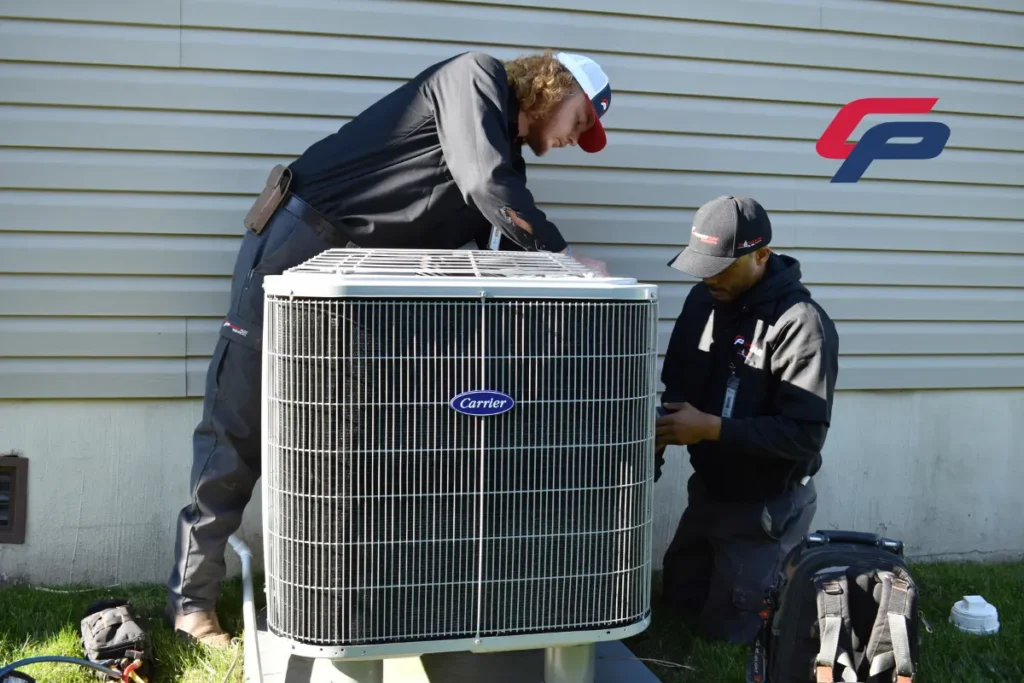 Since 2013, Comfort Plus Services has helped homeowners across Maryland’s Eastern Shore and Delaware make smart HVAC decisions. As a Carrier® Factory Authorized Dealer, Carrier President’s Award Winner, and Mitsubishi Electric Diamond Contractor, we offer:

