
Salt air and coastal humidity on the Delmarva Peninsula can cut an air conditioner’s lifespan from the typical 10 to 15 years down to as little as 3 to 5 years if the outdoor unit is not protected and maintained. The cause is galvanic corrosion: salt particles settle on the aluminum fins and copper tubing of the condenser coil, humidity turns that film into an electrolyte, and the metal begins eating itself from the outside in.
For Delmarva homeowners (especially beach communities like Rehoboth, Bethany, Fenwick, and Ocean City) a twice-yearly tune-up and a simple rinse routine are the two highest-value habits to extend system life.

Why Delmarva Is Harder on AC Systems Than Most Coastal Regions
On most of the Eastern Shore, a homeowner is within ten miles of significant saltwater exposure, and summer dew points regularly sit in the 70s. That combination of airborne salt plus months of high humidity is the exact recipe for galvanic corrosion on an outdoor condenser coil.
Here’s what we see most on Delmarva HVAC service calls: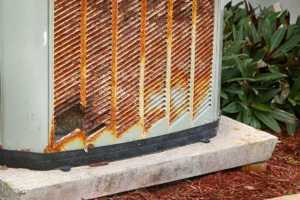
- White, green, or rust-colored deposits on the condenser coil fins
- Fins that are pitted, bent, or missing at the edges
- AC units running longer cycles while cooling less
- Electricity bills climbing without any usage change (apart from electricity rates rising, which we’re all dealing with)
- Metallic or musty odors from the outdoor unit
- Systems failing at 6 to 8 years in homes within a mile of open water
Once fin corrosion starts, the compressor has to work harder, which then wears the compressor out early. One problem creates the next.
The Specific Risks for Beach Homes and Second Homes
Seasonal beach homes face a second problem on top of salt air: they sit closed up for weeks or months at a time with humidity climbing indoors and a condenser outdoors that nobody is checking. By the time the owner returns for the season, the system has lost efficiency, the evaporator coil may be growing mold, and the condensate drain is often already clogged.
If you own a seasonal home in Sussex County or along the Maryland coast, assume your AC is aging roughly twice as fast as an inland system and plan maintenance accordingly.
How to Protect Your AC From Salt Air Damage: An Action Plan + Checklist
How Comfort Plus Services Diagnoses Coastal HVAC Wear
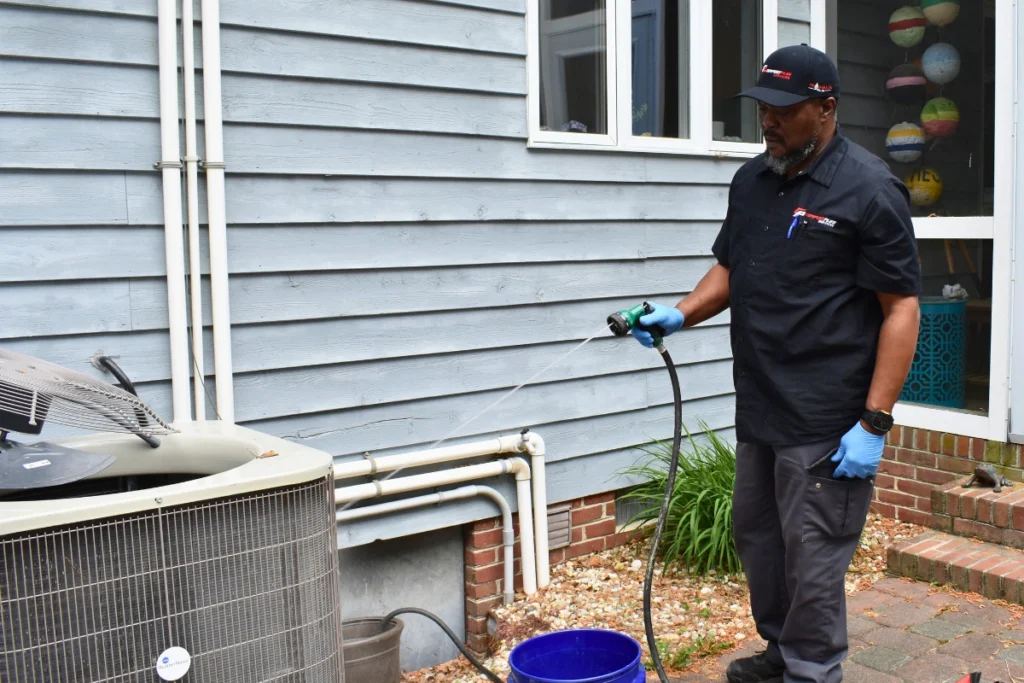
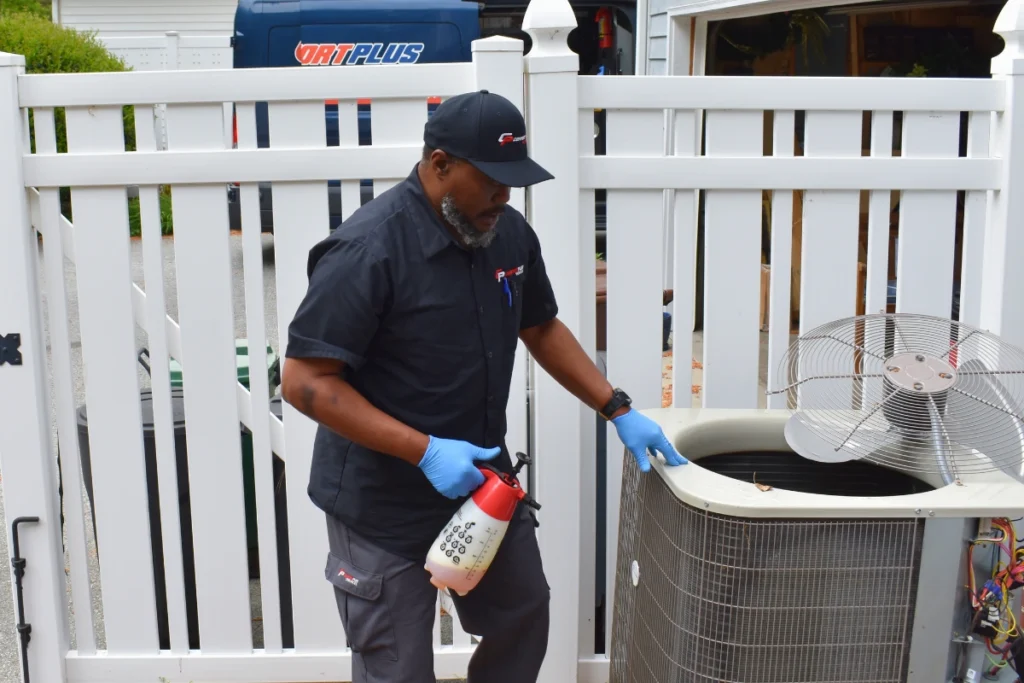
“When I respond to a call in Rehoboth or Fenwick, the first thing I check is the condenser coil for pitting, then the electrical connections inside the unit for salt residue. On coastal homes, I also test the capacitor under load, because salt corrosion on the contacts causes capacitors to fail a year or two earlier than inland.
If I catch pitting early, we can clean it, apply a coil coating, and often buy the homeowner another few years on the system.”
— Comfort Plus Services lead HVAC technician Mike H. (pictured), Georgetown, DE
Our NATE-certified technicians complete 40+ hours of continuing education annually and are trained on multiple types of systems that are the most popular for coastal homes. We have serviced Delmarva homes since 2013 from six offices across the peninsula.
Schedule Your Spring AC Tune-Up
If your AC is showing any of the wear signs in this article, our Georgetown and Salisbury teams are booking coastal tune-ups now. Call 866-950-2653 or schedule online.


