There’s a specific kind of dread that can come with opening up a beach house for the season.
If you own a vacation or second home on the Delmarva Peninsula, this scene probably feels familiar. Coastal houses don’t love sitting empty. Salt air corrodes outdoor HVAC equipment whether anyone’s there or not. Humidity creeps up. Water lines that haven’t had flowing water through them in 90 days or more develop their own problems.
The good news: a couple hours of preparation and a short list of professional checks will save your weekend. Here’s the checklist our Eastern Shore team uses when we open beach homes each spring, organized by what you can do yourself and what’s worth a professional service call.
Quick Answer: What should be on a beach house opening checklist?
- Before turning on water, walk the property and look for water damage.
- Open windows for 20 minutes before engaging the AC and dehumidifier(s).
- While the windows are open, check your thermostat and outside AC condenser for damage.
- Clean outdoor AC equipment and check vents, spigots, and septic or sewer connections for obvious issues.
- Change your HVAC filter. Set thermostat to 72-74 degrees once windows are closed, and listen/smell for anything abnormal.
- Make sure water is dripping from your HVAC condensate drain line, outside the house.
Or, hit the easy button and have our pros come out and check all this (and more) before you arrive. Sign up for a Service Plan today and schedule up to two tune-ups annually. HVAC and Plumbing Service Plans are available, so your primary home systems will be covered for every season.
The First Walk-Through (Do This Before You Touch Anything)
Before flipping breakers, turning on the AC, or running water, walk through the house with a notepad. The goal is to catch problems before they become bigger ones.
- Open windows for 20 minutes. Air out the closed-up smell and get a feel for the humidity. If the air feels heavy and damp, you’ve got a humidity problem to address before the AC has to fight it.
- Look at every ceiling for water stains. New brown rings, ripples in drywall, or sagging spots mean a leak happened while you were gone. Note the room and call us before turning on the plumbing.
- Check under sinks, behind toilets, around the water heater, and in the laundry area. Look for dried water marks, mineral crust, or active drips. A flashlight helps.
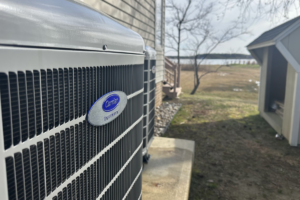
- Look at your outdoor AC unit. Bird nests, branches, dead leaves, mud daubers, and corrosion on the metal panel are all common. Take a phone photo to show your tech.
- Change your air filter. Replace it before turning the system on. A clogged filter is the most common reason an AC trips its breaker on the first hot day.
- Look at your thermostat. Replace the batteries if it’s battery-powered. If the screen is showing an error, write down what it says or take a picture for us.
HVAC Checklist: What to Check Yourself, What to Have a Pro Look At
Your air conditioning system is the part of the house that struggled most while you were away. Heat and humidity build up in a closed-up coastal home, and the system has to work harder than usual on the first day you run it.
What you can do yourself
- Replace the air filter. New filter, every spring opening. Non-negotiable.
- Make sure the outdoor unit is clear. Pull leaves and debris away from the fins. Don’t use a pressure washer (it can bend the aluminum fins).
- Set the thermostat to 72 to 74 degrees and turn the system on. Listen. A loud rattle, a high-pitched whine, or no air coming through vents are all signs to stop and call us.
- Open every supply vent in every room. Closed vents from last fall mean uneven cooling and longer run times.
What’s worth having a pro check
 Refrigerant level. Low refrigerant is the number-one repair we make on beach homes in May. A tech can measure it in 10 minutes; you can’t diagnose it yourself.
- Outdoor coil and contactor. Salt air corrodes both faster than any inland equipment. Our techs use a non-acid coil cleaner and check for contactor pitting.
- Capacitor health. Capacitors fail gradually, and the early signs are easy to miss until the system quits on a 92-degree day.
- Drain line. A clogged condensate drain causes indoor water leaks and shutdowns. We clear and treat the line during a spring tune-up.
- Electrical connections. Loose connections from a long off-season are a real fire risk.
 Refrigerant level. Low refrigerant is the number-one repair we make on beach homes in May. A tech can measure it in 10 minutes; you can’t diagnose it yourself.
“When I respond to a call in Rehoboth or Fenwick, the first thing I check is the condenser coil for pitting, then the electrical connections inside the unit for salt residue. On coastal homes, I also test the capacitor under load, because salt corrosion on the contacts causes capacitors to fail a year or two earlier than inland.
If I catch pitting early, we can clean it, apply a coil coating, and often buy the homeowner another few years on the system.”— Comfort Plus Services lead HVAC technician Mike H. (pictured), Georgetown, DE
 “When I respond to a call in Rehoboth or Fenwick, the first thing I check is the condenser coil for pitting, then the electrical connections inside the unit for salt residue. On coastal homes, I also test the capacitor under load, because salt corrosion on the contacts causes capacitors to fail a year or two earlier than inland.
Why a Service Plan saves vacation-home owners money
If you own a beach house, our Service Plan is the single best move for HVAC and plumbing peace of mind. You’ll get up to two tune-ups per year (spring AC, fall heating), priority scheduling, a 15% repair discount, and a multi-point inspection that specifically looks for salt damage on coastal homes. For absentee owners, we coordinate around your travel dates and work with property management companies to make sure your home is protected while you’re away.
Plumbing Checklist: 7 Steps to Take Before You Use the Plumbing
Before you turn the main water supply back on, use this checklist to do it carefully:
- Open every faucet halfway, including outdoor spigots. This relieves pressure in the lines.
- Find your main shutoff valve. Old valves seize up; make sure you can turn it.
- Check all the way around the water heater. Puddles, rust streaks on the tank, or heavy mineral crust around the valves mean you need to call us before firing it up.
- Turn the water supply on slowly. Listen for hissing or banging in the walls (a sign of trapped air or a hidden leak).
- Let every faucet run for 2 to 3 minutes. The first water out will be cloudy or rusty. Once it runs clear, close the faucet.
- Flush every toilet. If a tank runs continuously, you’ve got a fill-valve issue.
- Check under every sink again after the water has been on for 10 minutes.
Water heaters need their own check
Water heaters are the appliance most likely to have failed while you were gone, and the most likely to flood your home, basement, or crawl space when they go. Look at the tank. If you see rust streaking down the side, scale around the temperature and pressure relief valve, or a small puddle underneath, don’t fire it up. Call us first.
A long off-season lets mineral buildup harden inside the tank (for traditional water heaters) or in the heat exchanger (for tankless models). If you have hard water (most of Delmarva does), either model benefits from an annual flush. We flush tanked water heaters as part of the Plumbing Service Plan, and offer the service for any type of water heater during a one-time maintenance visit.
Coastal Humidity Is the Problem Nobody Tells You About
Inland homes deal with humidity in summer. Coastal homes deal with it year-round, especially when nobody’s there to run the AC.
If your beach home felt heavy and damp on the first walk-through, it’s not in your head. Humidity in a closed-up coastal home routinely runs 70-80% in spring, which is where mold, mildew, musty smells, and warped flooring start. Running the AC will pull some humidity down, but a standalone AC isn’t enough of a dehumidifier for the humidity levels we typically see in our area.
Three things that actually work for coastal home humidity
- Run a whole-home dehumidifier. These tie into your HVAC system and control humidity independently of cooling. For Sussex County beach homes especially, this is the single best moisture-control upgrade you can make. Cost varies, but most homeowners report eliminating that musty, closed-up smell within 48 hours of installation.
- Set the AC fan to “circulate” mode while you’re away (if your system supports it). Constant airflow prevents stagnant moisture.
- Open closets and interior doors on the day you arrive. Let the AC pull air through (and humidity out of) every part of the house.
Indoor Air Quality: The 15-Minute Spring Reset
If anyone in your family has allergies, asthma, or just doesn’t like the closed-up smell of a beach house, give your indoor air quality 15 minutes every spring.
- Replace HVAC filters with a MERV 11 or 13 filter. Higher-MERV filters catch more pollen, dust mites, and coastal mold spores.
- Run the system on fan mode for an hour with windows closed.
- Wipe down supply registers. They get dirty in the off-season, and you don’t want that dusty mix airborne.
- Check that bathroom exhaust fans actually exhaust. Hold toilet paper to the vent while it runs. If it doesn’t stick, the fan or duct may be clogged.
- If you’ve got a UV light or air purifier installed, replace the bulb. Most require annual replacement.
The Smart Move: Have Someone Check the System Before You Drive Down
 If you’ve got the kind of schedule where a wasted weekend at the beach isn’t your idea of a good use of your time, here’s the easiest fix: have someone check the systems before you arrive.
For Service Plan members in Sussex County, Wicomico, Talbot, and the surrounding counties, we can go to the property a few days before your first visit of the season. We test the AC, run the water, look at the water heater, check for anything obviously wrong, and send you photos. If something needs fixing, we’ll usually have it done before you arrive.
If you’re not on a Service Plan, we can still schedule a one-time spring opening visit. Call our Georgetown office (or whichever office is closest to your property), and we’ll work around your travel dates.
Ready to Open Your Beach House Without the Headaches?
Comfort Plus Services has been opening, closing, and maintaining Delmarva beach homes since 2013. From our six offices across Delaware and the Eastern Shore of Maryland (Georgetown, Federalsburg, Cambridge, Easton, Salisbury, and Grasonville), our NATE-certified technicians cover HVAC, plumbing, indoor air quality, and Service Plan members across Sussex County, Wicomico, Worcester, Talbot, Dorchester, Caroline, and Queen Anne’s counties.
Call 866-950-2653 or request a service visit online and we’ll get your property ready.