Summer heat on Delmarva can be an oppressive mix of coastal humidity and heat, causing us to spend more time in our homes. While air conditioned spaces give us a welcome escape from the heat, indoor air quality in the summer can begin to decline and present problems of its own.
Here’s why your home’s indoor air quality suffers in summertime, and how you can help your HVAC system filter the air so it’s healthier.
Indoor Air Quality: Eastern Shore Challenges
The weather outside your home also affects the air quality inside your home. The effects vary depending on your home’s “envelope,” or how tightly the building is sealed. It’s also impacted by indoor humidity levels, and contaminants that get trapped in your home when windows are closed and stale air recirculates.
These factors aren’t unique to summer, but during seasons of extreme temperatures when windows are closed, they can lead to deteriorating air quality. If left unaddressed, that recirculating air can impact health and quality of life for your family.
Your Home’s Primary Enemy: The Effects of Coastal Humidity
The U.S. Environmental Protection Agency recommends keeping indoor relative humidity between 30 and 50 percent, and no higher than 60 percent. If humidity is higher than that limit for a while, it can create an environment where mold, dust mites, and bacteria thrive.
Delmarva summers bring us coastal moisture, afternoon storms, and high dew points that push indoor humidity past 60 percent in most homes. A standard central air conditioner removes some moisture as it cools. While some systems are more efficient than others at removing moisture, without the addition of a dedicated dehumidifier, most homes we service are still too humid to maintain healthy air quality.
 Dust mites are microscopic bugs that live in soft surfaces and thrive in warm, damp conditions. They rank among The American Lung Association’s top three indoor allergy and asthma triggers. If you’ve ever seen sunlight streaming in through a window and noticed tiny particles floating in the air, you’ve most likely seen the contamination dust mites can cause.
Dust mites don’t bite or spread disease. The health risk comes from their allergens. Mite waste and body fragments float through the air and settle into dust and fabric. For sensitive people, breathing those contaminants triggers an immune response and can lead to asthma attacks.
Mites absorb moisture, and they need it to survive and multiply. Keeping indoor humidity in the EPA’s recommended 30 to 50 percent range makes a home less hospitable to dust mites, on top of the mold-prevention benefit.
Recirculating Air Traps Contaminants
Obviously, we don’t advocate “air conditioning the whole peninsula” by keeping doors and windows open. That wouldn’t help humidity levels, and it certainly isn’t going to help your HVAC system’s cooling efficiency. The problem with keeping doors and windows closed all summer is that some building materials and cleaning supplies are made with volatile organic compounds, or VOCs, that evaporate into the air over time.
When you’re not letting fresh air into your home, those VOCs build up in the recirculating air and can worsen allergies, lead to headaches and nausea, and cause irritation of the eyes, nose, and throat. They can also damage the central nervous system and contribute to the development of some types of cancers.
The Solution: Controlled Air Exchange and Humidity Removal
The most obvious risks of stale indoor air can be controlled through a few smart moves to clean and dehumidify the air:
- 1
Run exhaust fans during and after showers or cooking. Save open-window ventilation for cooler, drier mornings and evenings, and let your HVAC system and dehumidifier manage the rest of the day. Some homeowners install bathroom exhaust fans with lights above showers to remove the option of showering or bathing without the fan on; turn on the light, and the exhaust fan is running.
- 2
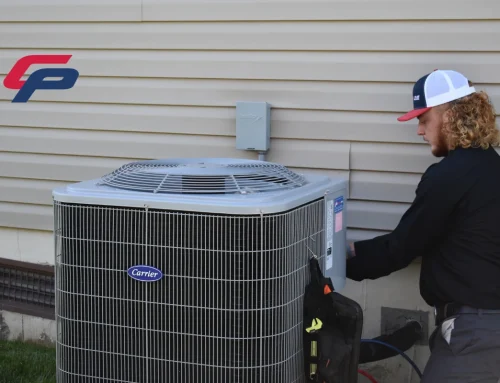
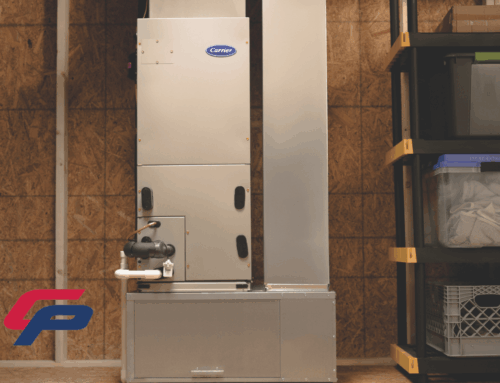
Add whole-home dehumidification. A system like the CarrierⓇ DEHXX Performance Whole Home Dehumidifier ties directly into your HVAC system. It removes excess moisture across the entire house and keeps humidity in the 30 to 50 percent range the EPA recommends. If you’re not ready for a whole-home system, room-sized units in high-humidity areas can help, so give us a call if you need a recommendation for a smaller unit we trust.
- 3
Add whole-home air purification. The Air Knight IPG installs directly into your HVAC ductwork. It combines germicidal UV with bi-polar ionization to reduce airborne bacteria, mold spores, viruses, odors, and VOCs. It’s ozone-free and runs continuously as air circulates through the house.
- 4
Keep filters clean and systems maintained. A dirty filter restricts airflow and lets more pollutants recirculate. Seasonal maintenance catches drainage issues and coil buildup before they turn into mold sources.
- 5
Get a professional assessment. A trained technician can find humidity and airflow problems that aren’t visible from a normal walkthrough, especially in older homes or homes near the water.
 The NATE-certified technicians at Comfort Plus Services install and service dehumidification and air purification systems across the Eastern Shore and Delaware. Learn more about our indoor air quality solutions, or call 866-950-2653 to schedule an assessment.