
Ductless mini-split HVAC systems cool and heat individual rooms using an outdoor unit and wall-mounted indoor units, without the addition of ducts to carry the conditioned air. That makes them ideal for existing Delmarva Peninsula coastal home retrofits and room additions, with minimal structural impact and lower installation costs.
Since Comfort Plus Services is a Mitsubishi Electric Diamond Elite Contractor, we install quite a few Mitsubishi ductless mini-split systems, as well as other top-name brands. What we love about these systems is that a single outdoor unit can service multiple indoor units, which makes for a clean exterior look that doesn’t have a huge impact on curb appeal or increased coastal air maintenance issues. A single outdoor unit can support up to 8 indoor units, though most home installations use 2-5 zones depending on the home’s layout.
Here’s a quick video from Mitsubishi Electric about how mini-split systems work.
Reason 1: No Ductwork Required
While the majority of Sussex County homes were built after 1995, with HVAC ductwork as a standard inclusion, homes on Maryland’s Eastern Shore were primarily built around 1981. Up to 15 percent of those homes were built before 1950, which means they most likely lack any original duct runs in either the attic or crawl space.
Adding a traditional ducted system to an older home, especially when it’s a living piece of Delmarva’s history, means tearing into walls, ceilings, or crawlspaces. Anyone who owns an older home knows that type of intrusive renovation is bound to lead to expensive reworking of framing, insulation, and wall covering like plaster and lathe. A mini-split AC solution doesn’t create those new headaches, and preserves a historic home’s structural integrity and interior appeal (especially those high ceilings).
Coastal homeowners with existing HVAC systems primarily add onto the home’s exterior, choosing to expand livable outdoor spaces like sunrooms, and entertaining spaces like bonus rooms and guest rooms. Adding ductwork to a newer home can be cost-prohibitive when you’re looking at cutting through an exterior wall, but ductless mini-split systems only require pipe access between the interior and exterior units.
Reason 2: Room-by-Room Zone Control
Traditional HVAC systems limit a homeowner’s ability to heat and cool certain rooms or areas – or not condition the air at all – because of the connected ductwork. If no one’s using your guest room, with a traditional system, you can close and cover the vents. With a ductless HVAC system, you can turn off that room’s wall unit, reducing your overall energy consumption by limiting air conditioning to the rooms you’re currently using.
The zoned-system approach works just as well for seasonal homes and rentals. When opening up a beachfront home for the season, it’s easy to gradually begin conditioning zones or rooms as you need them. Because mini-split wall units are powerful sources of conditioned air, each zone you turn on will cool much faster than a ducted system could manage.
Reason 3: Handles Delmarva Humidity and Salt Air
Mini-splits are built to combat and withstand coastal punishment that can shorten AC life on the Delmarva coast. Corrosion-resistant coatings protect the outdoor unit from salt air, and inverter technology pulls humidity out of the air more effectively than a standard system that just cycles on and off.
Salt air and humidity are different problems, and mini-splits address both.
Salt air / corrosion
- Mitsubishi and other manufacturers offer coastal-rated outdoor units with corrosion-resistant coil coatings (Blue Fin, Gold Fin), which resist the salt exposure that eats through standard aluminum fins. Comfort Plus installs Blue Fin units as our standard, and we recommend Gold Fin units for waterfront homes.
- Sealed electrical compartments protect circuit boards and wiring from salt-induced corrosion, a common failure point in coastal HVAC equipment.
- Compared to central systems, a mini-split has no ductwork run through a salt-humid attic or crawlspace, removing one more corrosion and mold pathway.
- Without protective upgrades, coastal mini-splits may only last 7-10 years, but proper coatings and maintenance can push that closer to 15.
Humidity
- Inverter-driven mini-splits run continuously at variable speeds rather than cycling on and off. That pulls more moisture from the air over time than a standard on/off system.
- Many models include a dedicated dry mode, prioritizing dehumidification over straight temperature drop. This matters on the mild, humid shoulder-season days common on the peninsula.
- Because there’s no ductwork, there’s no duct-borne mold risk from moisture condensing inside a hot, humid attic run, a real problem with central systems in coastal climates that often leads to a musty smell and even air quality issues.
Reason 4: Efficient Heating and Cooling in One System
Mini-split heat pump installation is popular with Eastern Shore homeowners for all the reasons we’ve listed above, but system efficiency is also a huge selling point.
Central systems, whether heat pump or furnace+AC, push conditioned air through ductwork that loses energy along the way. Poorly installed or leaky ducts can lose 25% or more of total energy. Mini-splits don’t have that problem, and they also use inverter-driven compressors that ramp output up and down to match demand, rather than cycling fully on and off like most standard central equipment. Any HVAC technician will tell you the highest energy use for a standard compressor-driven system is starting from a standstill. Mini-splits don’t have to, because they’re “always on.”
Here’s a side-by-side comparison of what you can expect from each type of HVAC system when it comes to energy efficiency.
Ductless Mini-Split vs. Central Heat Pump vs. Conventional Central AC + Furnace
| Metric | Ductless Mini-Split Heat Pump | Central Ducted Heat Pump | Conventional Central AC + Furnace |
|---|---|---|---|
| SEER2 (cooling)* | 20–28.7+ | 15–22 | 13.4–16 (typical standard install) |
| HSPF2 (heating)** | 9–12 | 8–10 | N/A (furnace uses AFUE, not HSPF2) |
| Duct energy loss | None, no ducts | 15–30% typical loss | 15–30% typical loss |
| Zone-level control | Room-by-room, standard | Only with add-on zoning dampers | Whole-home only |
| Heating and cooling in one unit | Yes | Yes | No, two separate systems |
*SEER2 measures cooling efficiency over a full season. It's the ratio of cooling output to electricity used. Higher numbers mean more cooling per dollar spent. Traditional ducted systems with high efficiency can reach a SEER2 rating of 24, while mini-split heat pumps can reach much greater efficiency levels.
**HSPF2 measures heating efficiency over a full season for heat pumps. It's the ratio of heat output to electricity used. Higher numbers mean more heat per dollar spent.
Reason 5: Faster, Less Invasive Installation
Compared to the structural work that’s required to install a ducted system, mini-split installation happens much faster. Although the technicians at Comfort Plus Services are skilled at all types of system replacements (and our customer reviews praise our technicians for their quick work and cleanliness), redoing or installing ductwork naturally takes some time and can be inconvenient for homeowners.
In contrast, most single-zone ductless AC installations wrap up in a single day, often just 4 to 8 hours. Even a multi-zone system for a few rooms usually finishes in 1 to 3 days. Compare that to retrofitting ductwork into a home that has none, which can take a week or more.
Reason 6: Excellent for Vacation and Rental Properties
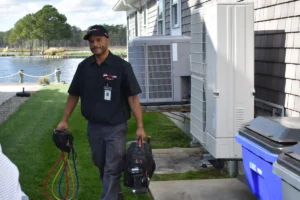 Comfort Plus Services has provided HVAC service for vacation homes on the Eastern Shore and Delmarva since 2013. In all our years of servicing those homes and opening and closing them for the season (we manage both HVAC and plumbing for most of our vacation home customers), we’ve noticed that all the benefits of mini-split systems are even more important in seasonal properties.
- Without ductwork and air handlers to collect dust and moisture, mini-split homes smell fresh, even when they’ve been closed for the winter. There’s not as much of an opportunity for them to develop a musty or moldy smell.
- When our technicians arrive to open a vacation home, the first thing we do is get the stale air moving by turning on the HVAC system. Mini-split units are powerful and can cool a home so quickly, they’ll nearly reach thermostat temperature before we even finish our inspection.
- Even when a mini-split system isn’t running full-time, we notice less corrosion on outdoor units that are specifically designed for salt air and humidity. We always include anti-corrosion treatment when we perform seasonal HVAC service tune-ups, so we know that double protection will extend the life of a mini-split system far beyond that of a system made for inland use.
Reason 7: Scalable for Whole-Home or Single-Room Needs, and Home Additions
Needing to add an HVAC system to a home or room without ductwork is reason enough to pursue a ductless mini-split. But, we also know that home renovations and additions happen, and every room we live in will need an HVAC system.
A properly sized multi-zone system can make it much easier to condition new spaces as you finish them. If there’s any chance you’ll want to add more indoor mini-split units to other rooms later, tell your technician during the estimate and planning stages. While a multi-zone outdoor unit can accommodate as many indoor units as it has ports and power available, a single-zone unit doesn’t offer any expansion at all.
Sizing the outdoor unit with room to grow costs a little more now and saves a full second install later.
Reason 8: CPS is Certified by Top Mini-Split Manufacturers
Comfort Plus Services holds top-tier certification from two leading mini-split manufacturers: Mitsubishi Electric Diamond Elite Contractor and Carrier® Factory Authorized Dealer. That means homeowners get unbiased recommendations and expert installation and service.
Not all HVAC companies on Delmarva have the same level of training and expertise, and that’s important to know when you’re considering where you’ll get a quote for a mini-split AC retrofit. Always ask a provider about their team’s technical training and continuing education, because as new models are released, it’s important for your installation and service company to know the specifics of the mini-split model in your home.
Here’s why Comfort Plus designations and continued training from Mitsubishi and Carrier® matter for your mini-split installation project:
- The right recommendation for your home. A single-brand contractor recommends whatever they sell. CPS can match the system to the home and budget instead of the home to the inventory.
- Cross-trained technicians. Techs are factory-trained on both platforms, with annual continuing education to keep up with the latest advancements in mini-split technology from the nation’s top manufacturers.
- Enhanced warranty coverage. Mitsubishi Diamond Elite and Carrier® Factory Authorized status each carry additional extended warranty terms.
- Broader parts and service support. Two manufacturer relationships means faster access to parts and priority support. When your ductless heat pump eventually needs service, Comfort Plus has a direct connection to the manufacturer for additional support and the highest-quality parts.
When you’re ready to learn more about ductless mini-split HVAC options on Delmarva, reach out to Comfort Plus Services. We’ll recommend the right solution for your home and needs, and we guarantee you’ll be happy with our work – and your new ductless AC.
Frequently Asked Questions (FAQs)

Call on Comfort Plus Services whenever you need up-front pricing, quality work with a satisfaction guarantee, and quick attention to your home’s HVAC and plumbing needs. Since 2013, Comfort Plus has been providing professional and dependable service, and hundreds of five-star Google Reviews are just a snapshot into how our customers feel about our commitment to going above and beyond, in all that we do.


