HVAC Repair

When your heating or cooling system lets you down during extreme weather, you need an HVAC company you can rely on. 

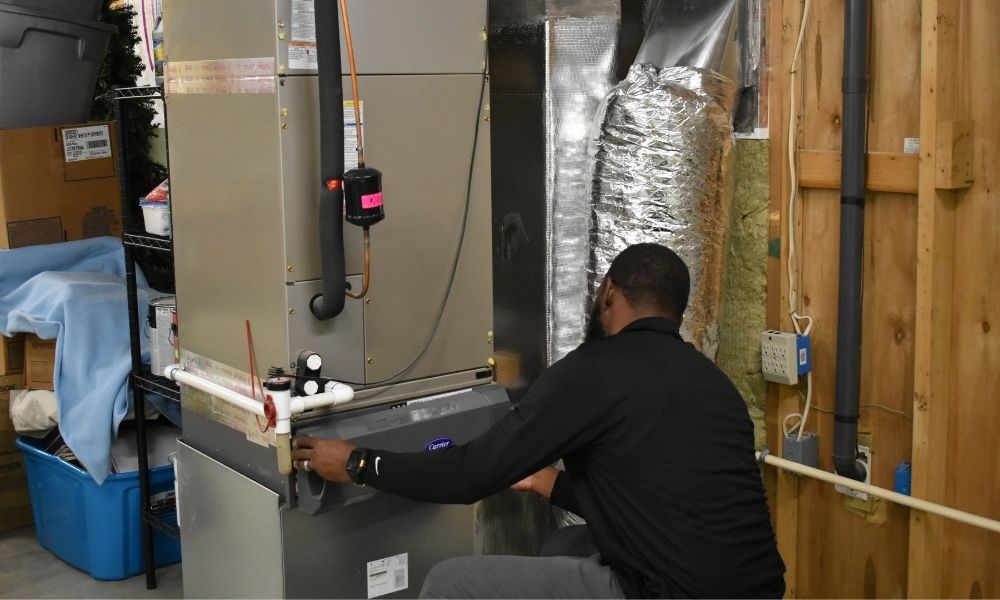
A CPS HVAC service technician performs repairs on a Carrier indoor air handler during an HVAC service call.

Heating System Repair

If you notice any of these issues with your heating system, it’s essential to call in the professionals at Comfort Plus Services right away. Ignoring these problems can lead to more severe damage and costly repairs down the line. Our technicians have experience repairing furnaces, heat pumps, boilers, mini-splits, and ducted systems.

Even the most well-maintained heating systems can experience issues over time. Some of the most common problems we encounter include:

  • Thermostat malfunctions
  • Dirty or clogged filters and ductwork
  • Pilot light or ignition problems
  • Leaks

Cooling System Repair

When your air conditioner breaks down, you need a reliable and experienced team to get it back up and running quickly. At Comfort Plus Services, we specialize in air conditioning repair services for homeowners and businesses. Our skilled, NATE-certified technicians have the knowledge and expertise to diagnose and repair any issue with your AC system, ensuring you stay cool and comfortable all summer long.

No matter what problem you’re facing with your air conditioner, our team has the skills and experience to get it fixed quickly and efficiently. We pride ourselves on providing quality services, and our knowledgeable and trained technicians always strive to achieve 100% customer satisfaction.

Not sure if you need repairs? Check out some common HVAC symptoms and their potential causes to be sure.

Our team has experience repairing a wide range of air conditioning issues, including:

  • Refrigerant leaks
  • Frozen evaporator coils
  • Clogged condensate drains
  • Malfunctioning compressors
  • Damaged fan motors
  • Electrical issues
  • Coolant flushes

Avoid Costly Repairs with an HVAC Service Plan

Regular HVAC maintenance not only prevents unexpected breakdowns, but also improves energy efficiency, potentially reducing your utility bills by up to 30%. Enroll in a Service Plan with Comfort Plus Services, and you’ll enjoy an annual comprehensive tune-up, 15% off repairs, and priority service.

Our Service Plans offer peace of mind, knowing that your home’s vital systems are in top condition. With options tailored to your specific needs, you can rest assured that your HVAC system will run smoothly throughout the year. Don’t wait for costly repairs – invest in preventative care and experience the benefits of our Service Plans today.

Schedule Your HVAC Repair Appointment

By providing a telephone number and submitting this form you are consenting to be contacted by SMS text message. Message and data rates apply. You can reply STOP to opt-out of further messaging.
Address(Required)
Residential or Commercial property(Required)

Common HVAC Symptoms and What Causes Them

When your heating or cooling system isn’t working, you’ll notice symptoms that could be caused by different mechanical issues. Some require immediate service, and some you can remedy on your own. Here are a few of the most common HVAC symptoms we see, what usually causes them, and how you know when it’s time to call in the experts.

Your system is running and the thermostat is set correctly, but the house won’t cool down.

The most common causes are a clogged air filter restricting airflow, low refrigerant from a slow leak, a dirty or frozen evaporator coil, or a failing compressor. On the Eastern Shore, salt air corrosion on the outdoor condenser coil is also a frequent contributor that accelerates coil degradation faster than in inland markets.

Check first: Replace the filter if it’s been more than 60 days. Look for ice on the refrigerant line near the outdoor unit or on the air handler. If you see ice, turn the system fully off and let it thaw before running it again.

Call us if: The filter is clean, there’s no ice, and the system still isn’t cooling after 30 minutes. Also call immediately if you see water pooling near the air handler (the inside unit). That’s likely a frozen coil that has started thawing and needs attention before it causes water damage.

We cover this in detail in our blog: Why Your AC Is Running But Not Cooling Your House.

The system is blowing, but the air is warmer than it should be.

This is often confused with the symptom above, but there’s a distinction. If the system is running and blowing air that feels room temperature or warmer, the most likely causes are a refrigerant leak, a tripped breaker on the outdoor unit (the air handler runs but the compressor doesn’t), a thermostat set to “fan only” instead of “cool,” or frozen coils restricting heat exchange.

Check first: Confirm the thermostat is set to “cool” and the fan is set to “auto,” not “on.” Go outside and verify the outdoor unit is actually running; you should hear the compressor and see the fan spinning. If the outdoor unit is silent while the air handler runs, check the breaker.

Call us if: The outdoor unit is running, the thermostat is set correctly, and air is still warm. A refrigerant leak won’t resolve on its own and the system will continue to lose capacity until it’s repaired.

HVAC systems make noise when they run, but new or changing sounds are almost always worth investigating. Different sounds point to different problems.

Banging or clanking usually means something is loose or broken inside the unit. It could be a fan blade, a loose panel, or in worse cases a broken component inside the compressor. Grinding points to motor bearing failure, which will worsen quickly if the system keeps running. Hissing can mean a refrigerant leak at a fitting or valve, or a ductwork pressure issue. Squealing typically indicates a worn blower belt or motor bearing in older systems.

Check first: A single bang on startup, especially in cold weather, is often just the ductwork expanding. Persistent or rhythmic noise during operation is the signal to act.

Call us if: The noise is new, consistent, or getting louder. Grinding and banging in particular indicate mechanical stress that compounds fast, and running the system through a noise like that risks turning a simple repair into a far more expensive service call.

Short-cycling is when your system starts, runs for a minute or two, shuts off, and then starts again. It never completes a full cooling or heating cycle.

It’s hard on the equipment because the startup phase draws the most power and creates the most mechanical stress. Common causes include an oversized unit that cools the space too quickly and triggers the thermostat before a full cycle completes, a dirty air filter, a failing thermostat or faulty sensor, low refrigerant, or a frozen evaporator coil. In summer, a refrigerant issue and a clogged filter are the most frequent culprits.

Check first: Replace the filter. If short-cycling stops, that was the cause. If it continues, note how long the system runs before shutting off. That timing is useful diagnostic information for the technician.

Call us if: Short-cycling continues after a filter change, or if the system is less than five years old. Short-cycling on a relatively new system often points to an installation or sizing issue that should be addressed under any applicable warranty.

You can feel air, but barely, when you hold your hand up to the vent.

Weak airflow usually means something is blocking or restricting air movement through the system. The most common causes are a clogged air filter, a failing blower motor, blocked or collapsed ductwork, or a frozen evaporator coil. In coastal homes on the Eastern Shore, duct leakage from humidity cycling and temperature fluctuations is a contributing factor we see regularly. In those cases, conditioned air leaks out into unconditioned spaces (like an attic or crawlspace) before it reaches the vents.

Check first: Replace the filter. If airflow improves noticeably, that was the cause. Also check that supply vents throughout the home are open and unobstructed by furniture or rugs.

Call us if: Airflow is weak after a filter change, or if only certain rooms or zones are affected while others are fine. That pattern points to a ductwork issue that needs inspection.

Water near the air handler is the symptom that requires an emergency service call. Even a slow leak can cause significant damage to ceilings, walls, and flooring in a short time, and mold can begin developing within 24 to 48 hours in Delmarva’s humid summers.

The most common causes are a clogged condensate drain line, a cracked or overflowing drain pan, a frozen evaporator coil that has thawed and released more water than the drain pan can handle, or a disconnected drain hose. Condensate drain clogs are by far the most frequent cause, because algae and debris accumulate in the line and block drainage. It’s also one of the most preventable issues with regular maintenance.

Check first: Turn the system off immediately to stop water from accumulating. Begin drying the area. Do not turn the system back on until the source is identified.

Call us: Right away. Water intrusion doesn’t wait, and identifying whether it’s a drain clog, a cracked pan, or a thawing coil determines what comes next. This is one of the most common repair calls we receive in summer, and our technicians carry the tools to clear a drain line and assess for damage on the same visit. A service plan includes annual drain line maintenance that prevents most of these calls from happening in the first place.

Smells coming from your HVAC system are worth taking seriously. Some are minor, and some require you to act immediately.

A musty or moldy smell usually means mold or mildew has developed in the ductwork, on the evaporator coil, or in a wet drain pan. It won’t go away on its own and can affect air quality throughout the home. We cover musty HVAC smells in detail in this blog post.

A burning smell — like burning plastic, rubber, or an electrical smell — means turn the system off immediately and call for service. Electrical faults and overheating motors are fire risks. Don’t run the system again until a technician has inspected it.

A rotten egg or sulfur smell, if your home uses gas, should be treated as a potential gas leak. Leave the home, don’t operate any switches or appliances, and call emergency services and your gas provider before calling us.

Call us: For a musty smell, schedule a diagnostic at your convenience. For a burning smell, call immediately at 866-950-2653 and treat it as an emergency.

A breaker that trips once after a storm or power event is usually not a concern. A breaker that trips repeatedly when you try to run the HVAC system is the equipment telling you something is wrong.

Common causes are an electrical fault in the system, a short in the compressor, a dirty condenser coil causing the system to draw excessive power as it struggles to reject heat, or a wiring issue. In older systems, a compressor that is beginning to fail will often draw higher current before it fails completely, and a tripping breaker is sometimes the first sign.

Do not repeatedly reset the breaker and restart the system. The breaker is protecting both your equipment and your home. Each restart attempt on a faulting system adds stress to the compressor, which is the most expensive component to replace.

Call us: Schedule a diagnostic before resetting the breaker a second time. We’ll identify whether the issue is in the electrical system, the condenser, or the compressor, and give you a clear picture of the cost of repair if the compressor is involved.

Frequently Asked Questions: HVAC Repair

Treat it as an emergency if you smell burning from the system, if the breaker keeps tripping, if water is actively leaking near the air handler, or if the system has stopped working entirely during extreme heat or cold. We offer 24/7 emergency HVAC service across the Eastern Shore and Delaware; call 866-950-2653 any time.

Most diagnostic and repair visits take one to three hours. Simple issues are often completed in the same visit. More complex repairs involving the compressor, heat exchanger, or a refrigerant leak with line repair may require a follow-up visit once parts are sourced. We’ll give you a clear estimate before any work begins.

The general benchmark is the 50% rule: if the repair cost exceeds 50% of the cost of a new system and the unit is more than 10 years old, replacement is usually the better investment. Factors like refrigerant type (older R-22 systems are expensive to recharge), repair frequency, and efficiency also weigh in. We’ll walk you through the numbers honestly at your diagnostic visit. Here’s a guide to repair vs. replacement, if you’d like to learn more.

Yes. Our NATE-certified technicians are trained to diagnose and repair all major residential HVAC brands, including Carrier, Trane, Lennox, Goodman, Rheem, and others. Comfort Plus Services is a Carrier Factory Authorized Dealer and a Mitsubishi Electric Diamond Elite Contractor.

Yes, most of the issues that require HVAC repairs are caught during a routine tune-up before they become repair calls. Annual maintenance is the most cost-effective thing you can do for the life of your system. See our HVAC service plans.

Yes. We serve Sussex County, Delaware and the surrounding beach communities, with a local office in Georgetown, DE. We work with vacation homeowners and property managers who need reliable service before and during rental season. Call 866-950-2653 to schedule.